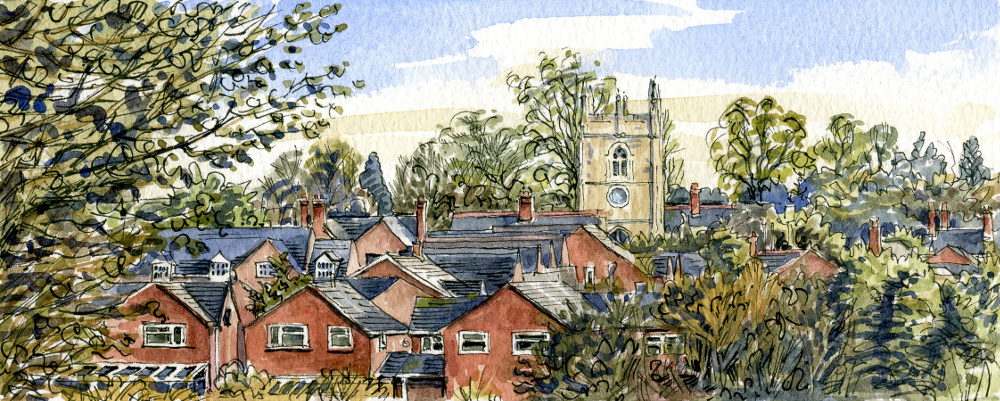

Picture the scene. It’s 1928 and a film crew arrives in Badsey to start filming at the Manor House. Excited schoolchildren with their families watch the activities. The two female stars are young American actresses making their film debut. The leading man is a well-known silent film actor.
Fast-forward nearly 80 years to 2007. The Badsey Society has recently been formed in 2002. The elderly residents of the village have many a story to tell. The late Tony Jerram, the first Chairman of the Society and who lived next-door to the Manor House, heard about a film which had been made there in the 1920s and was keen to find out more about it. Badsey Society member, the late Fred Roberts, then aged 93 but still with a phenomenal memory, recalled that the film was called The Price of Divorce. With this vital piece of information, Tony embarked on a voyage of discovery finding out more about the silent film which had been partly shot at the Manor House in 1928.
This is the story of that film, The Price of Divorce, which briefly brought some glamour to Badsey High Street.
* * * * *
The Film
The Price of Divorce was a silent movie made in 1928. The film, based on a novel by Reginald Fogwell, was made at Cricklewood Studios by Stoll Pictures, and was directed by Sinclair Hill. The film starred Miriam Seegar (1907-2011) as “The Other Woman”, Wyndham Standing (1880-1963) as “The Doctor” and Frances Day (1907-1984) as “The Wife”. Both Miriam Seegar and Frances Day were young American actresses for whom it was their film debut, whilst Wyndham Standing was a popular leading man in the silent film era. Rex Maurice, who was prominent in the part of the movie filmed in Badsey, was “The Other Man”. The screenplay concerned a doctor’s wife who wished to marry her lover, and so concocted a charge of adultery against her husband in order to divorce him.
Viewing the Film
Tony Jerram discovered that The Price of Divorce could be viewed at the British Film Institute in London. The late Richard Phillips offered to make contact with the archivist to arrange a viewing when he was next in London. Richard was keen on photography but, more importantly, he had a vested interest in the project – he actually lived in the Manor House (or rather, one half of it, as in 1948, the Manor House had been completely renovated and divided into two residences, Nos 4 & 6 High Street).
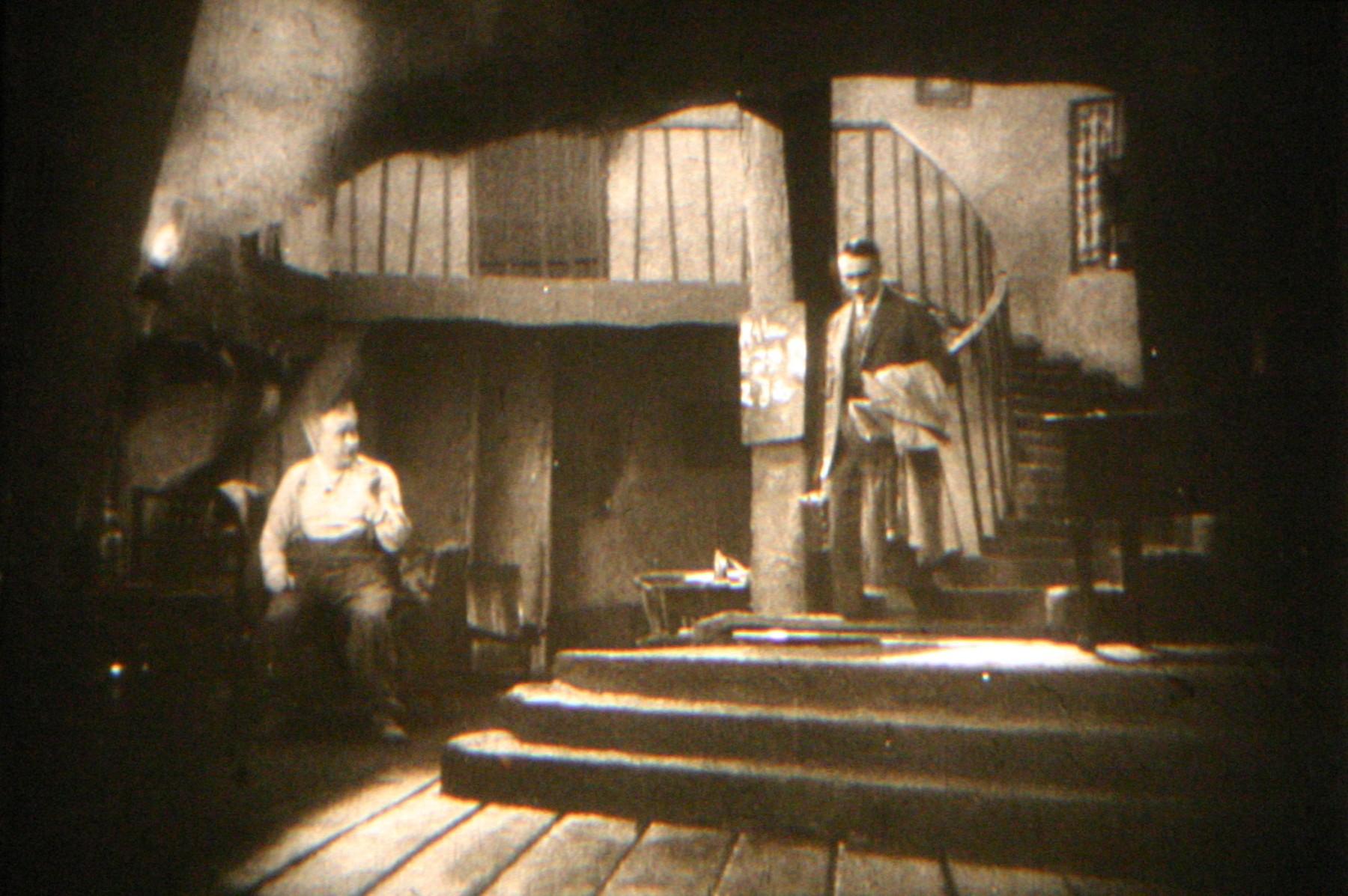
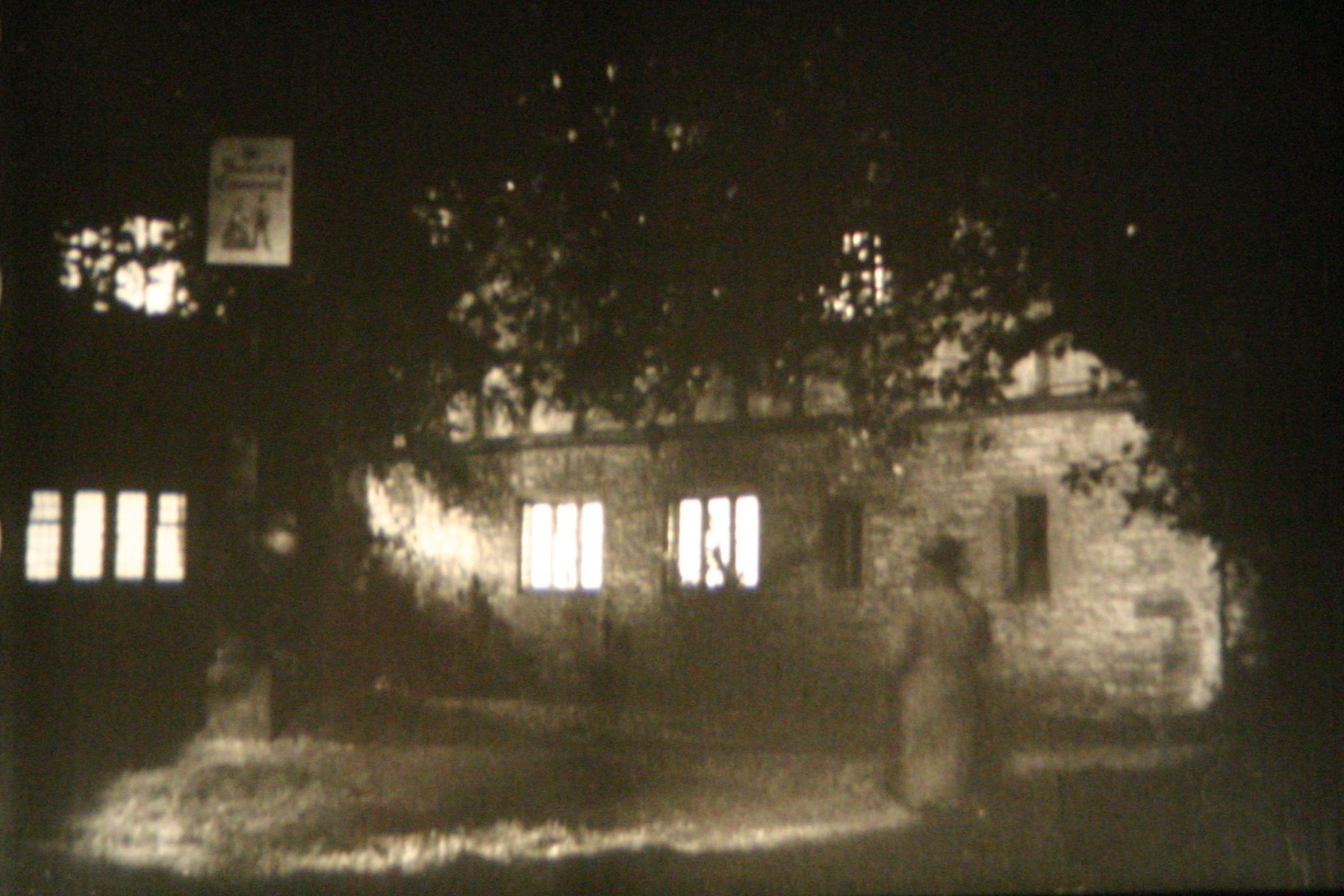
Tony died unexpectedly in April 2008, before a visit was made. Richard was conscious of the fact that it was a case of unfinished business as far as Tony was concerned, and so visited the Institute in June 2008. Richard reported back to the September 2008 committee meeting. He explained that it was quite an experience being allowed to handle the reels of 35 mm film. He was ushered into a viewing suite where he was able to watch the film on a small screen. There were four reels which he watched all the way through. He described the film as a fairly ludicrous story with not very much shot at the Manor House. The rear of the Manor House was used as the exterior for Ye Sweete Content Inn where the adulterous deed was supposed to have happened – but it didn’t really, and it was all a misunderstanding!
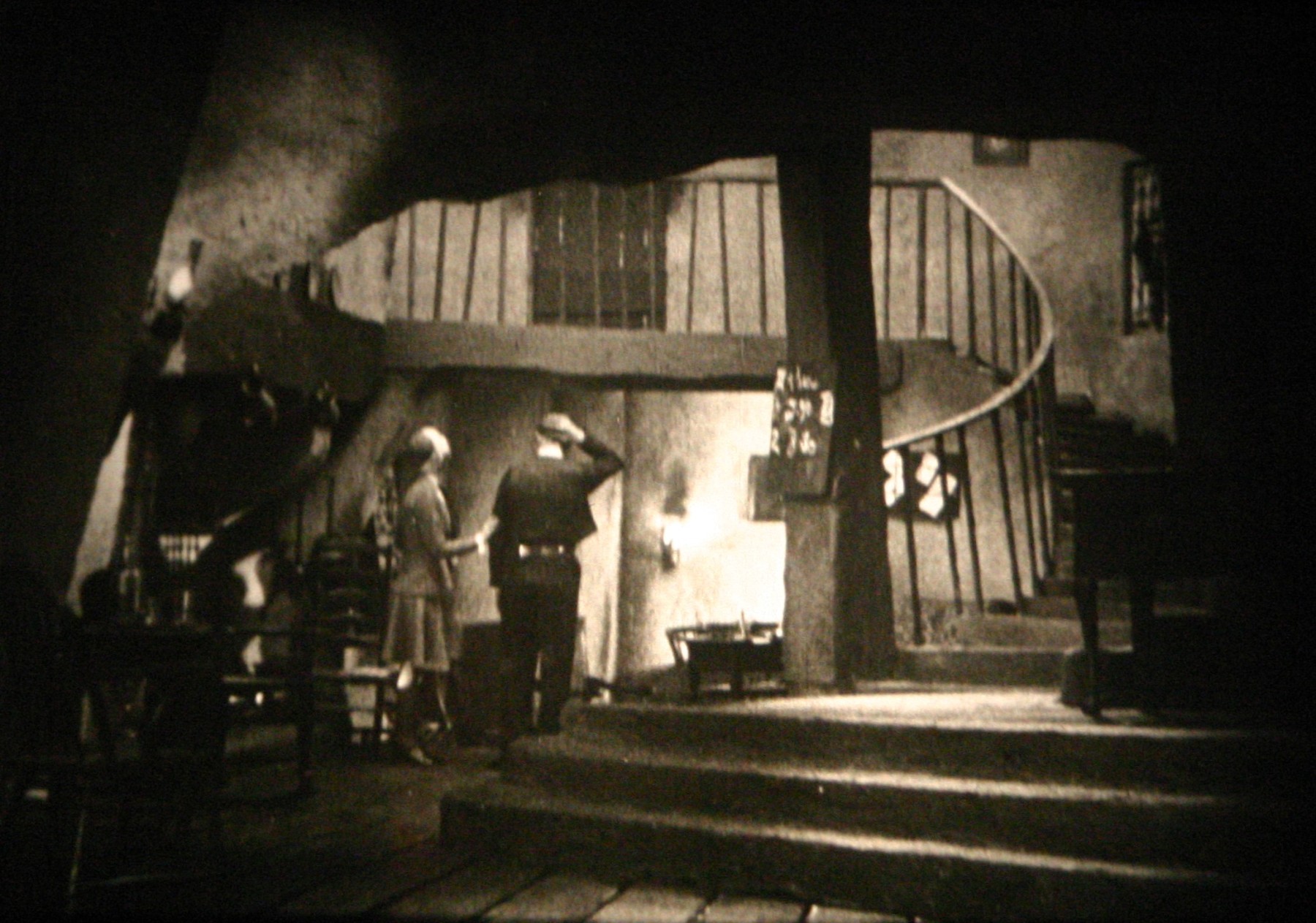
The film-makers had only used the exterior as it was in quite a state of ruin inside. Richard felt that the interiors were probably all sets but wondered whether the set designer might have visited as there were certain similarities. There was one feature on the rear of the house which Richard had wondered if it had been put in when the house was refurbished in the 1940s, but it is visible in the film, so he knew for certain it was definitely there in the 1920s.
How the film was made
Contemporary sources in newspapers of the period give some indication of how the film was made. The director, Sinclair Hill, came to the Vale of Evesham in mid May 1928 looking for exterior scene settings that most truly represented rural England, which were at the same time within reasonable distance of the studio at Cricklewood. Evesham and its surrounding villages and hamlets proved ideal for his purpose.
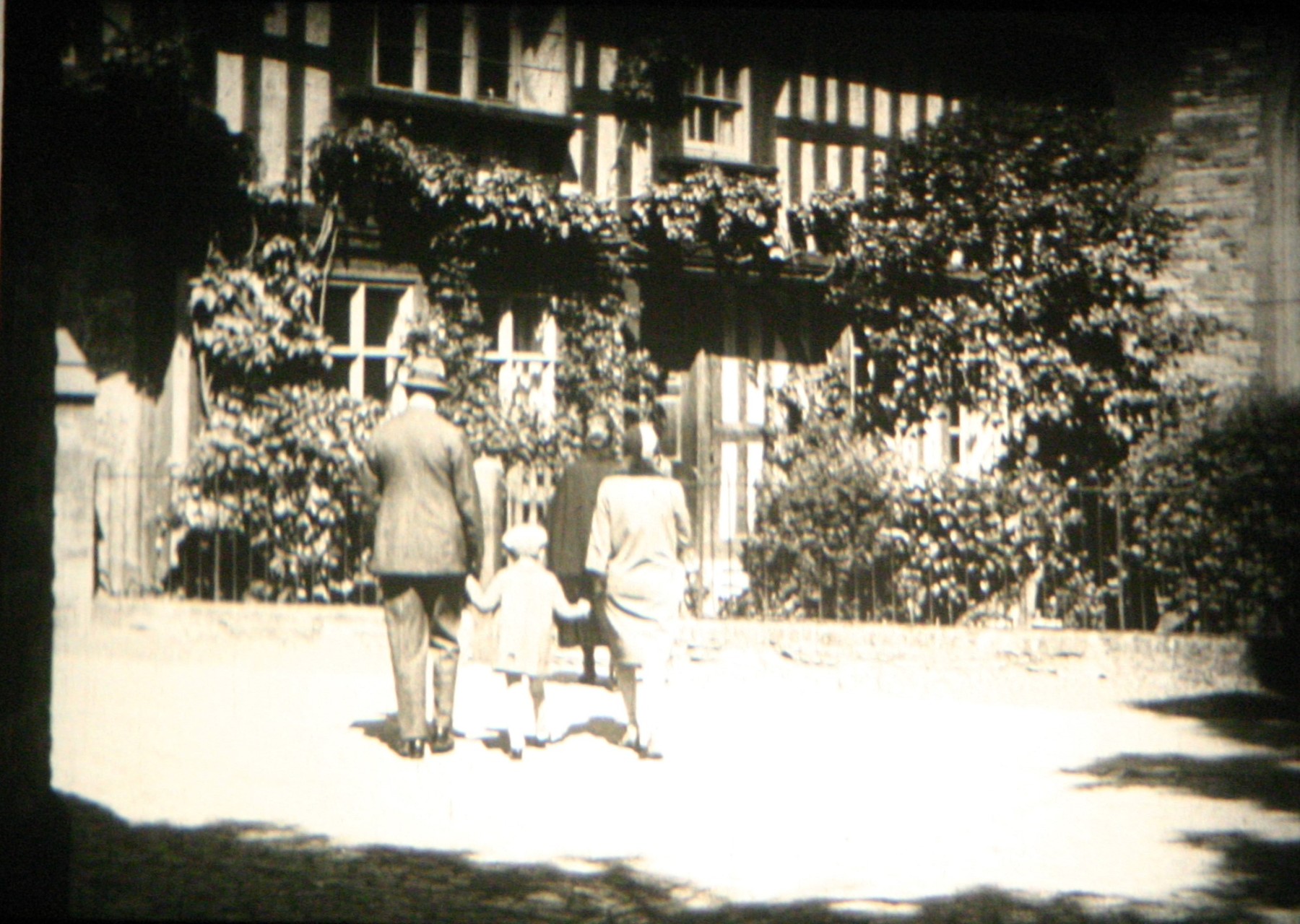
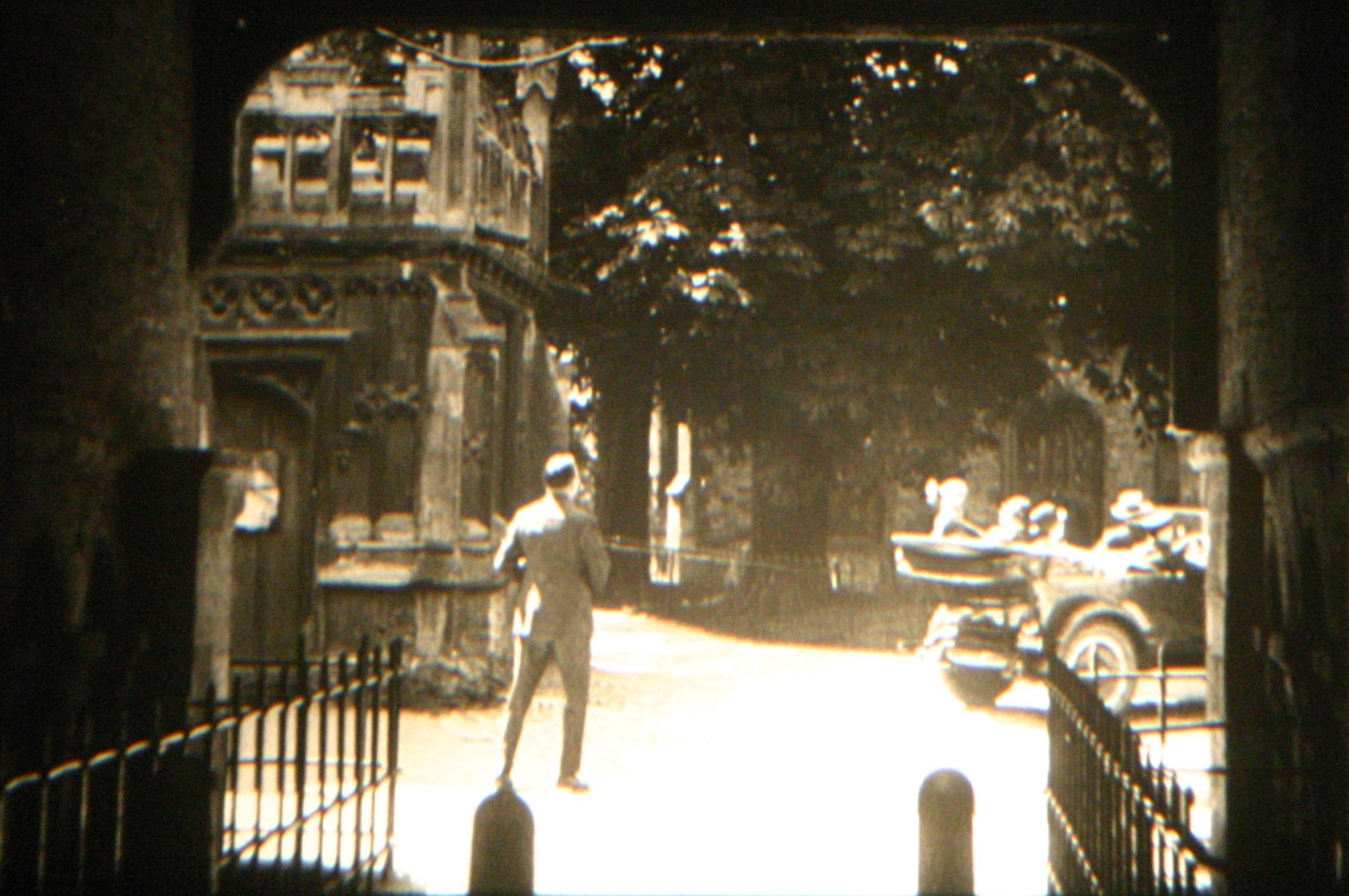
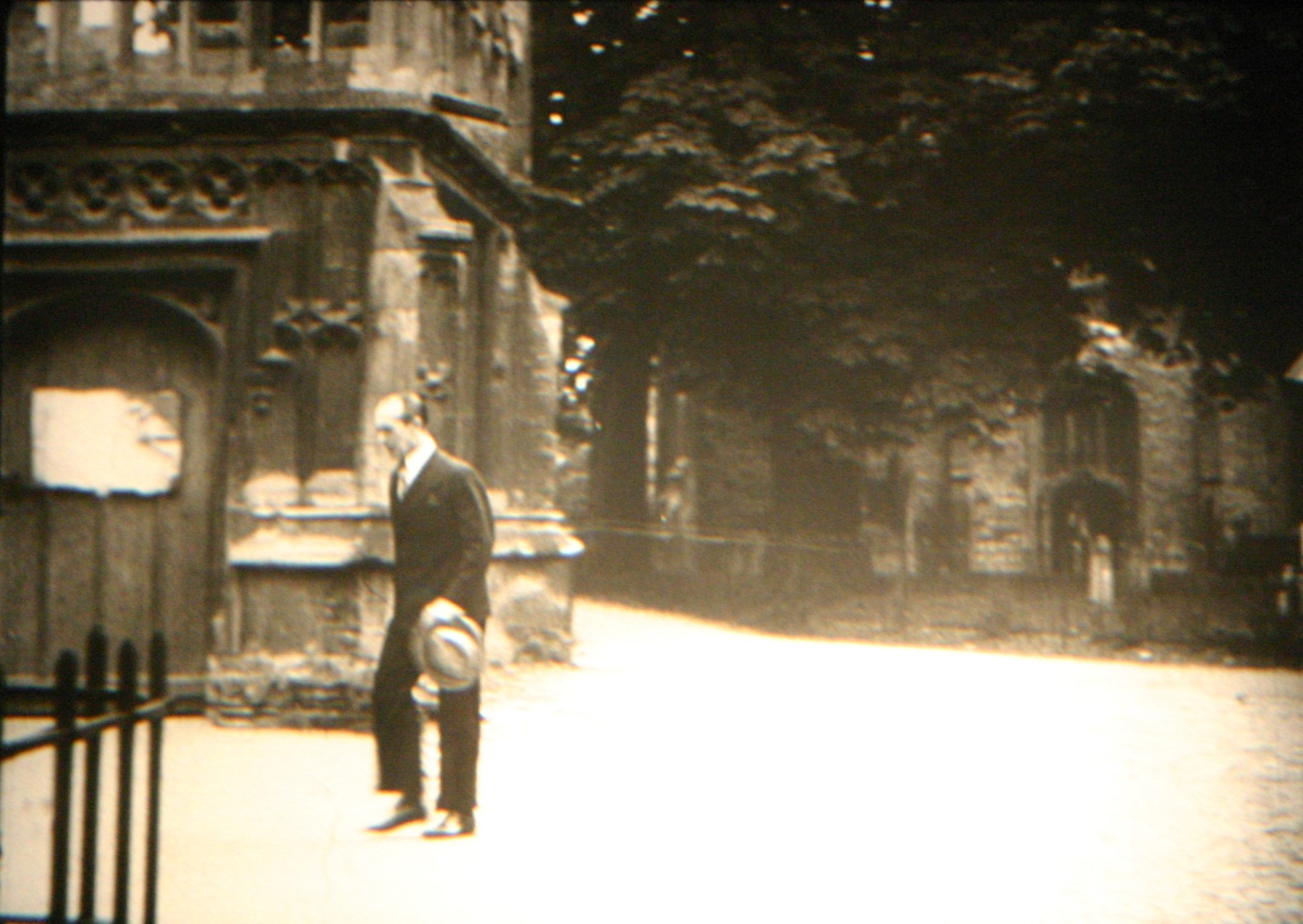
Just two weeks later, the director and his team arrived in the Evesham area to begin filming. Badsey Manor House became an inn, carpenters erecting in its grounds a large signpost, “Ye Sweete Content”. Filming in Badsey took place on the night of Friday 1st June between 9 pm and 2 am. The Gloucestershire Echo of 2nd June 1928 reported:
The inhabitants, and especially the natives of some of the villages where scenes are being “shot”, are tremendously excited about it. Crowds, which in some cases have called for extra policemen to control, gather to watch the film in the making, and one old lady, who lives in Badsey near the spot where certain scenes are being taken and admits she had been “to the pictures” only three times in her life, attempts to repay the company for the honour they are conferring upon her native place by preparing hot coffee and light refreshments for the actors and actresses when their labours are ended.
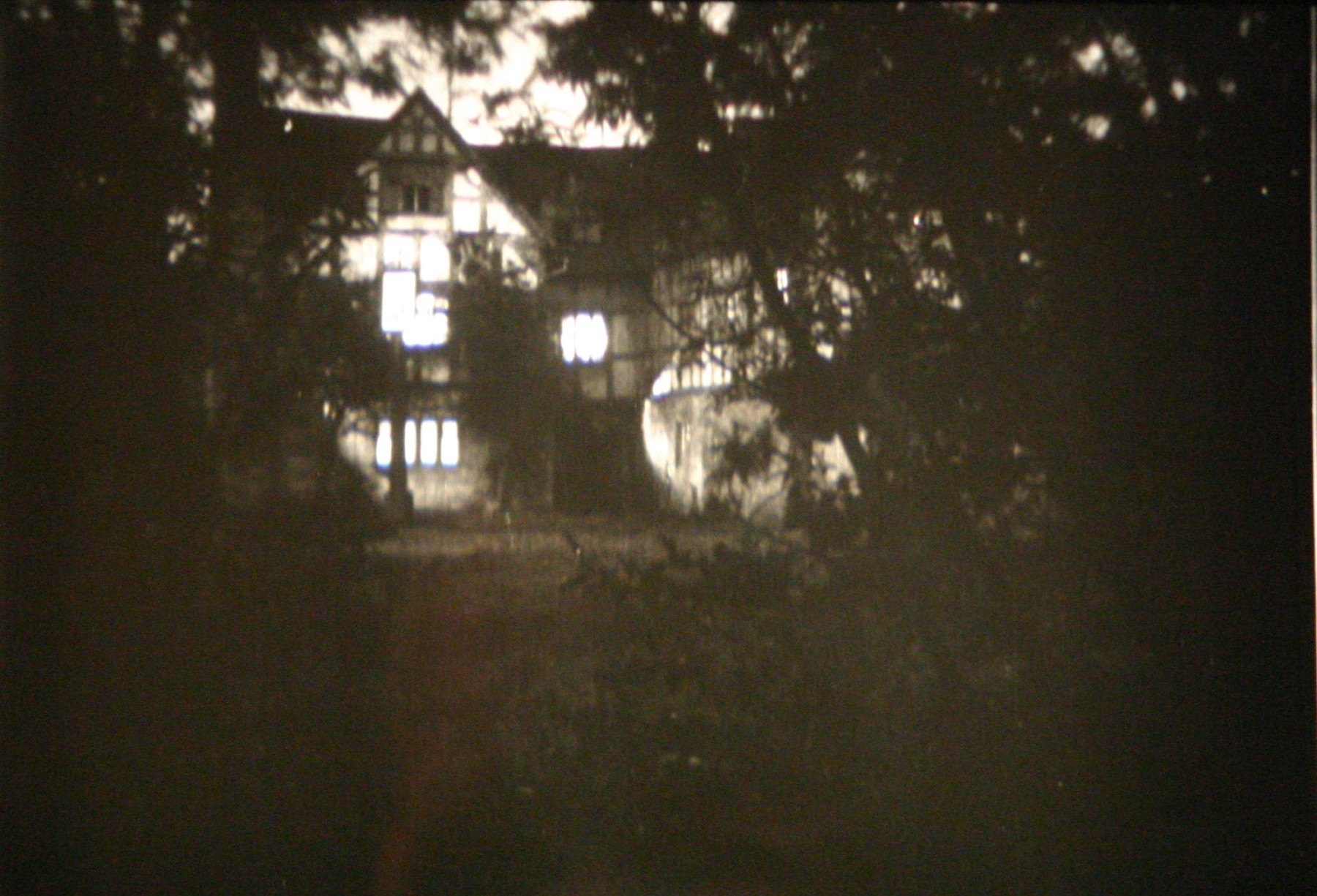
On Friday night, what is termed a “dusk shot” was taken at Badsey, a picturesque little village a mile or two from Evesham. Here is Badsey Manor House, a black and white half-timbered building which is reputed to be the second oldest manor house in the county. It is now unoccupied and in a pitiful state of dereliction. However, in the half-light, it looked as medieval and romantic a place as could be desired. The filming took place in the rear, where in the last few days a gaily-painted inn sign has been erected and a road constructed. The manor house is, for the time being, a wayside hostelry, and the scene taken represents a crucial point in the story, for it shows the arrival at the inn in the late evening of the husband and the “other woman” – a portion of the circumstantial evidence upon which the case for a divorce is built up.
In the preparation of the house and the surroundings for the purpose of the picture and in fixing the arc lights and connecting them with the three motor lorries which supply the electric current, 20 technicians and workmen spent 12 working hours. On Friday evening, in patient rehearsal and in acting and re-enacting the episode, the producer and the principals spent another two hours. And yet when the scene is fitted into its proper place in the sequence of events and is projected upon the screen, its showing will occupy little more than 45 seconds.
The Evesham Standard on the same day reported that 15 local unemployed men had been given a job of making a road on waste land at Badsey. The Birmingham Daily Gazette of 4th June added some extra information:
Large crowds have found new diversion in the evening watching the filming of tender love scenes on the banks of the Avon. Hundreds more flocked to the neighbouring village of Badsey to “Ye Sweete Content” where Mr Hill was busy from 9 pm till 2 am. Special police were engaged keeping the crowd to one end of a meadow. The spectators brought thermos flasks of hot tea and coffee and baskets of sandwiches and indulged in moonlight picnics.
The house enjoys the reputation of being haunted, but if spirits cannot thrive in light, then the illumination provided by the powerful arc lights which ringed the building was sufficient to drive away legions of spirits. Motorists approaching Badsey observed a white glare in the sky, and many thought a fire was raging.
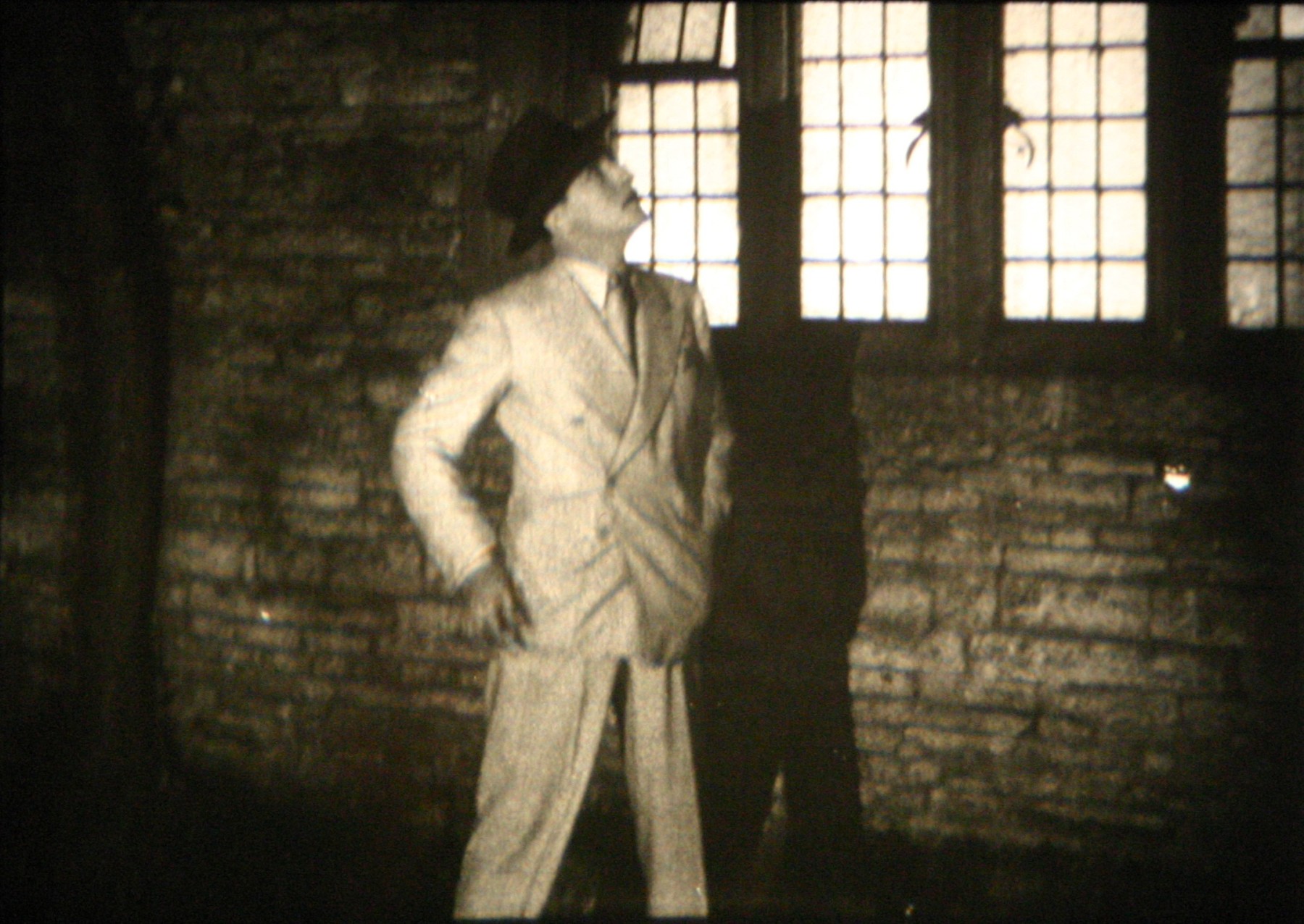
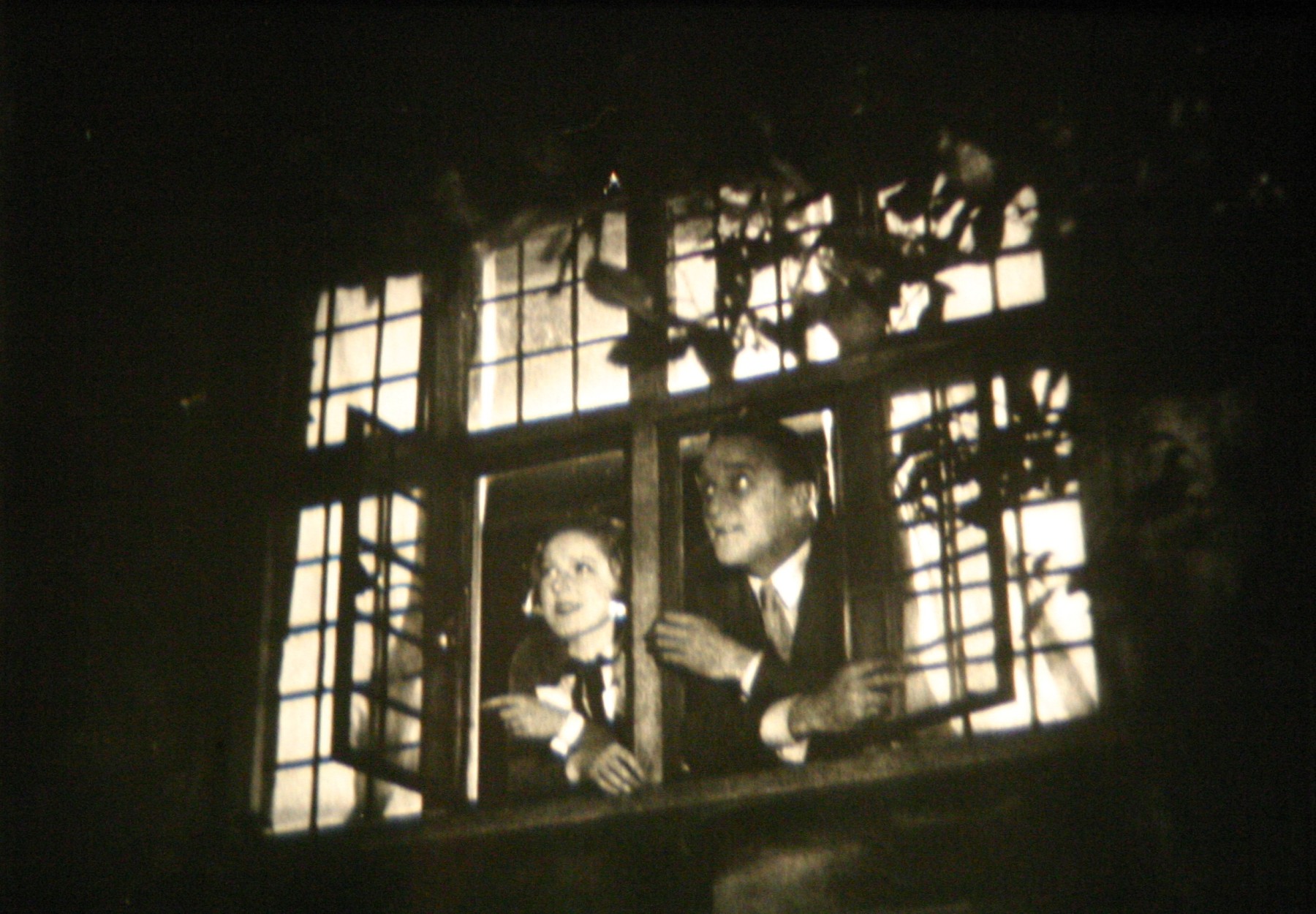
The artistes acting in these eerie settings were Miss Miriam Seegar, the leading lady and a pretty blonde; Mr Wyndham Standing, leading man; and Mr Rex Maurice, who held the spectators at Badsey thrilled and expectant by his villainous eavesdropping crouched against a wall below an open window in which the two lovers were talking. [However, according to The Evesham Standard, the effect of the love scene palled on the spectators after the third repetition!]
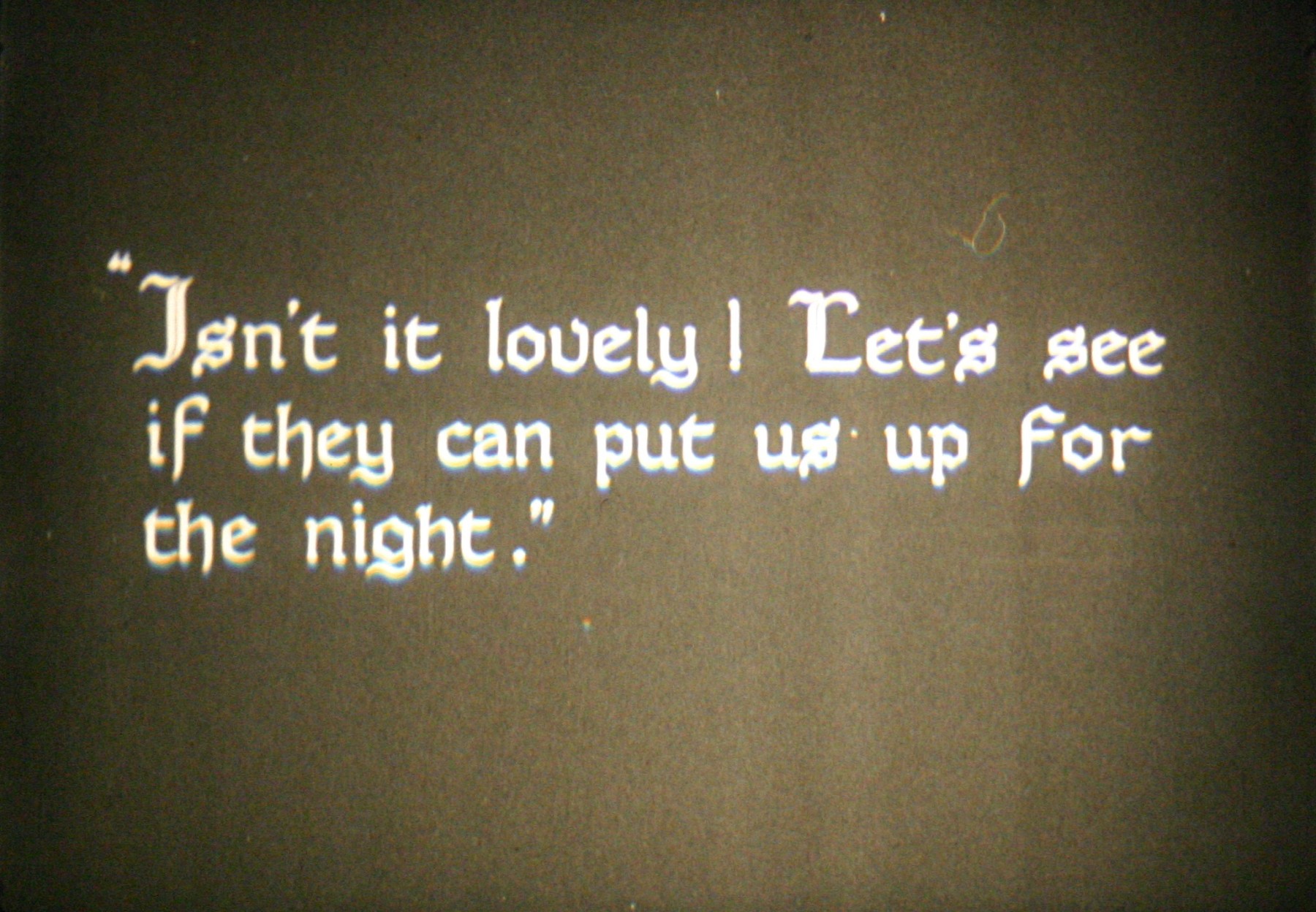
Below are some shots taken in Badsey.
Filming in Evesham
Filming in Evesham took place on the Thursday, Saturday and Monday, with the Church House becoming the residence of the doctor in the story. As The Gloucestershire Echo reported:
A curious scene was enacted on Thursday afternoon in the centre of Evesham. Outside Old Church House there drew up a taxi cab, the driver of which was recognized by the onlookers as a local man; and from the residence there dashed with every evidence of their making a hurried and unceremonious exit, a lady and a little boy and a little terrier. They bundled into the waiting vehicle, which went off at full pelt round the corner. As it was disappearing from view, thee emerged from the doorway an elderly man, clad somberly in professional garb, who shook his fist at the departing tenants and, realizing that pursuit was impossible, returned, grim-visaged, into the house.
And then the cab came back, and its occupants re-entered the house. Once more they came flying out and the whole scene was re-enacted. After that it was repeated again and yet again, even to the eighth time. And all the while a fresh-complexioned, keen-eyed man in the near background was watching the proceedings narrowly and issuing instructions in a crisp voice to the participants, while three cinematographic cameras clicked their faithful record of events.
Below are some shots taken in Evesham.
Summary of the plot
The IMDb website gives a summary of the plot:
A doctor working in an English country town lives with his wife, his eight year old son and his female cousin who works as his secretary. His blonde wife has a lover and she wants a divorce. She and her lover devise a plot to make it appear her husband is unfaithful. The husband is travelling with his secretary and finds he has run out of petrol. They are forced to stay the night at Ye Sweete Content Inn which only has one room. The secretary sleeps in the room and the husband sleeps downstairs sharing the inn’s living room with an eccentric Scotsman. During the night the lover tops up the husband’s car with petrol. The wife and her lover arrive in the morning and accuse them of adultery. The only witness, the Scotsman, has left.
The case goes to court and the wife is granted a divorce and custody of the son. Things look bad for the husband who begins to fall in love with his secretary. The son runs away from his mother to be with his father again. The son has been beaten by the wife’s lover. A servant offers to give evidence that the wife and lover are having an affair. This prevents the divorce becoming final. The husband sees he can now have custody of his son but must take his wife back too. The Scotsman appears and offers to give evidence. The husband can now divorce his wife and keep his son.
The Price of Divorce was never released as a silent film, but was adapted for sound and released two years later as Such Is the Law (1930) with a running time of 88 minutes. Producer Oswald Mitchell was able to take advantage of the invention of sound and surrounded it with a talking picture that augmented the silent story. Eight additional characters were added, the star of the film being Kate Cutler (1864-1955), who was cast as the Mother, who was attempting to save her daughter’s marriage.
Maureen Spinks, February 2026
Acknowledgements
I am indebted to three people who are no longer with us, without whom we might never have known of this exciting event in Badsey in 1928:
- Tony Jerram (1938-2008) who first heard the story of a film being made in Badsey
- Fred Roberts (1914-2013) who provided the vital piece of information giving the name of the film
- Richard Phillips (1946-2015) for travelling to London and spending several hours watching the film a number of times in order to take some still photos
The British Film Institute National Archive, London, for granting an in-person research appointment.
Sources of Information
British Film Institute National Archive
Internet Movie Database (IMDb) – The Price of Divorce
Internet Movie Database (IMDb) – Such is the Law