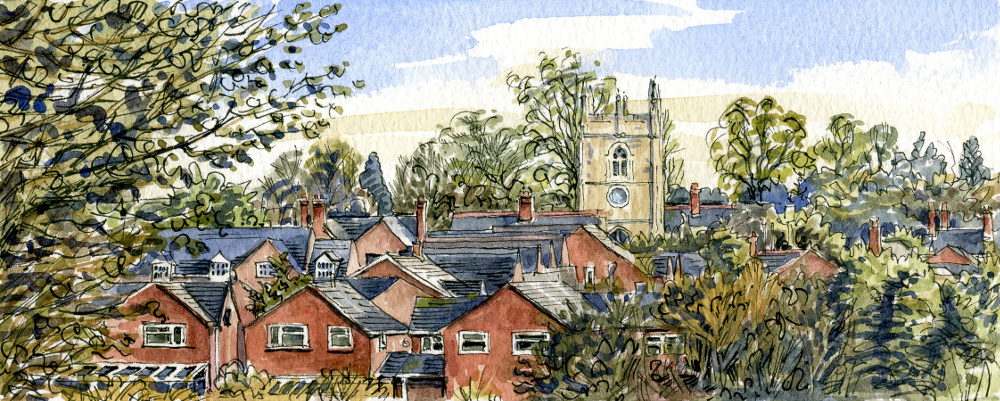

When the 1891 Census was taken, the family of John Basco Pope lived in Wickhamford Manor – he and his wife, Hannah Maria, and their five children. There were no resident servants whilst the Popes lived there but, at the time of this Census, two other people were recorded at the Manor as ‘Lodgers’. This term indicated that they were renting some rooms and were not casual visitors. The couple concerned were Francis Thomas and Sarah Ann Marrian. His occupation appears to be given as ‘Painter (Artist)’ and he was 42 years of age, whilst his wife was three years older. They had both been born in Warwickshire. (The first word of his occupation is unclear on the original document, so may not be ‘Painter’.)
No details have been found as to how long the Marrians lodged at the Manor, but they have been located in earlier Censuses. Francis Thomas Marrian was born in 1849, the son of a master silversmith, Francis Marrian (see footnote), and his wife, Harriet. In 1851 they lived in Cannon Street, Birmingham, and Francis employed 12 men. By 1871, Francis Thomas Marrian was living in Bordesley, Warks. with his parents and, aged 22, was described as an artist. Two years later he married Sarah Ann Jackson and in 1881 they were staying at the night of the Census at the Lichfield Inn, a hotel in Little Haywood, Staffordshire. At this time, he was recorded as a silversmith, so was probably working for his father. The couple had had a son, with an unusual middle name, Frederick Joyce Marrian, in late 1878, but he had died very soon after his birth. They appear to have had no other children.
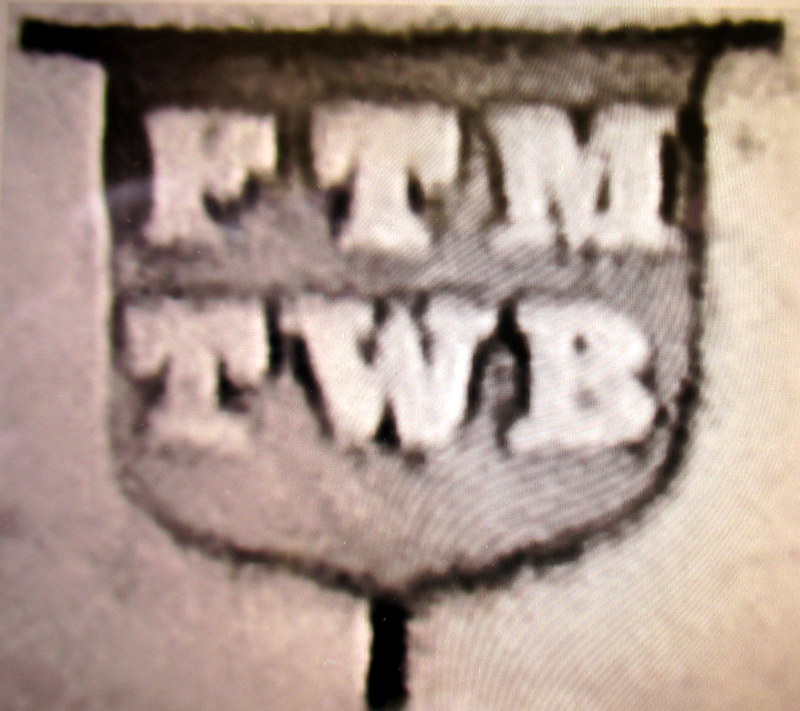
Francis Thomas Marrian, took over his father’s silverware and electro-plating business around 1879 and the company was then called Francis Thomas Marrian & Thomas William Bocock, manufacturing silversmiths with premises at 14 Cannon Street, Birmingham and Hatton Garden, London. From this information it would seem as if his description as an artist referred to him designing silver articles. The jointly owned company was dissolved on 12th October 1880 and he carried on the Birmingham business on his own account.
Francis Thomas Marrian died, aged only 44, in Barston, Warks., and was buried on 11th August 1893. He had only survived his father by a couple of months, as he had been buried in June, aged 91. The widowed Sarah Ann Marrian later married Samuel Keeley in 1898. According to the 1901 Census, he was an engraver's block maker carver and guilder, so may have worked for his wife’s late husband. Sarah Ann lived to be 85, dying in Solihull in 1932, her second husband, Samuel, having died in 1917.
Census Definitions
As well as family members present on census night, other people in a household, apart from servants, were referred to as ‘Visitor’, ‘Lodger’ or ‘Boarder’. A visitor was someone staying at the property but had a usual residence elsewhere. A lodger was a person who rented rooms in a house to live in, but provided and cooked their own food. A boarder was similar to a lodger but paid for both their rooms and their meals.
In the censuses in Wickhamford at the end of the 19th century, in 1891 there were 7 servants, no visitors, five lodgers and one boarder recorded in various households. Earlier, in 1881, it was two servants, one visitor, one lodger and one boarder. Later, in 1901, the returns included seven servants, eleven visitors, no lodgers and three boarders. Male lodgers could vote in elections provided they were over 21 years of age and paid at least £10 p.a. in rent, but Francis Thomas Marrian does not appear on the Wickhamford Electoral Roll for 1891.
Tom Locke, June 2026
Footnote
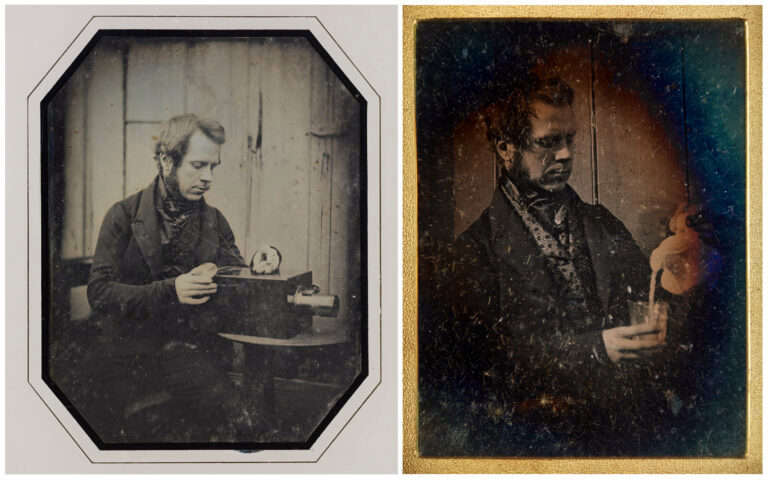
These very early Daguerreotype photographs show Francis Marrian senior in about 1843. They were taken by George Shaw in Birmingham. Shaw planned an early portrait studio and worked with early innovators in electroplating techniques, the Marrian brothers (Francis (1802–1893) and Benjamin James Pratt Marrian (1811–1891), using magneto-plate technology developed by another Birmingham industrial entrepreneur John Woolrich (c. 1791–1843).