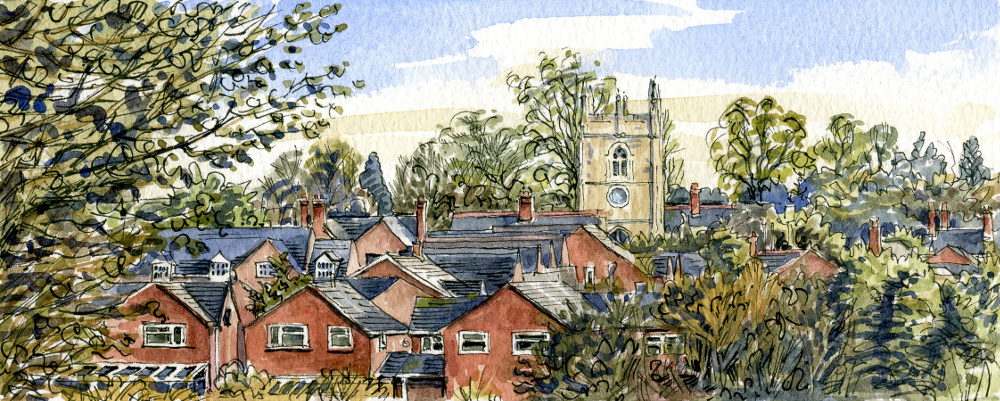

When John Waters and his wife, Pat, moved to Badsey in 2017, he had no idea that members of his family had owned property in Badsey some hundred years previously. But truth is stranger than fiction and he discovered, after the death of an aunt and taking possession of some old deeds, that his great-grandmother, Mary Stephens (née Curnock), had bought two cottages at the end of Old Post Office Lane in 1912 – just a short distance from where John now lives. Furthermore, the discovery of a further deed revealed that Mary had bought another house in Badsey, this time a newly-built house on the High Street, in 1913.
Mary never lived in Badsey, so it is assumed that she bought the houses as an investment. So who was Mary and where were the houses that she owned?
* * * * *
The property on Old Post Office Lane
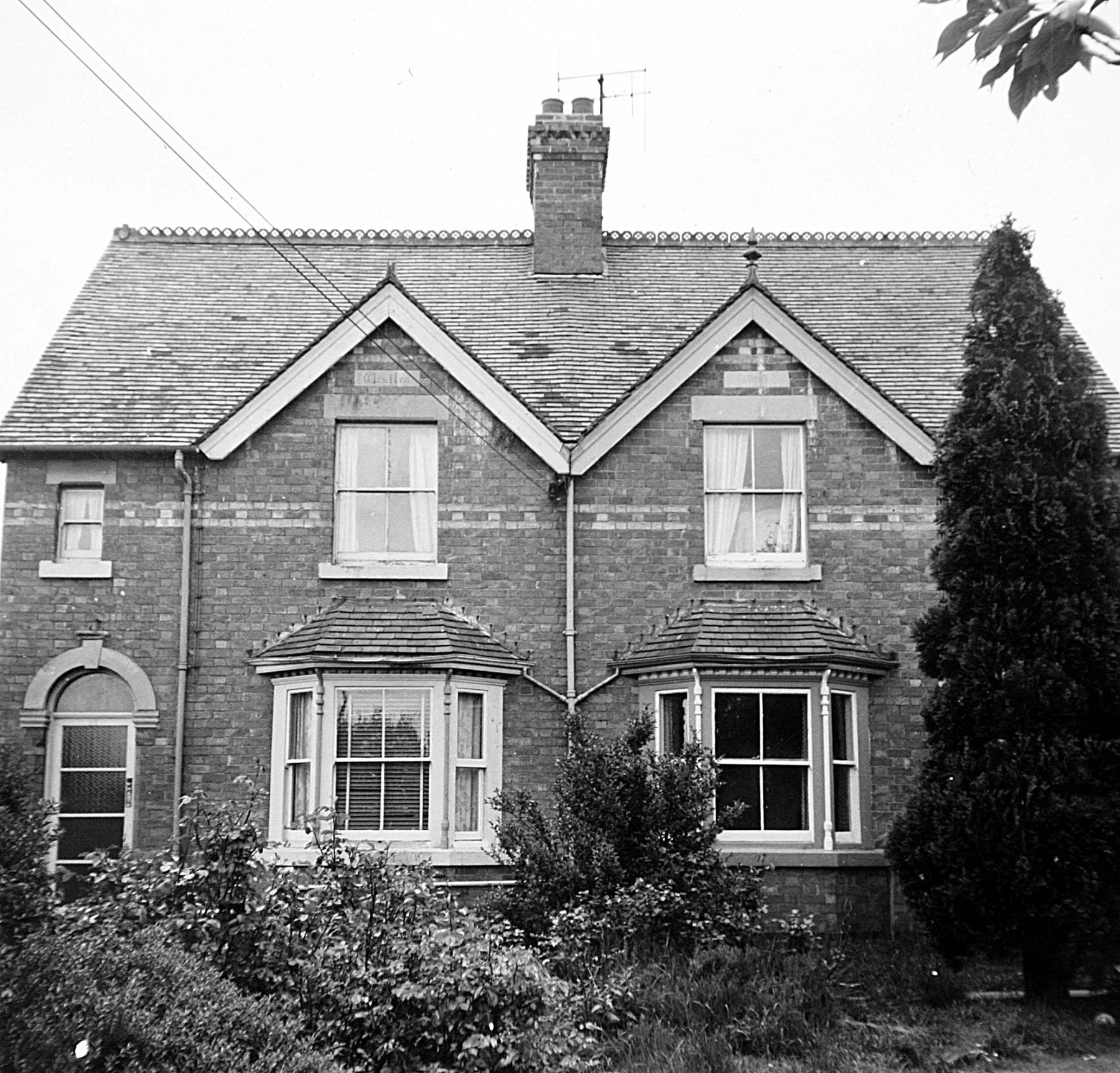
The houses in question on Old Post Office Lane were a pair of semi-detached houses known as Nos 1 & 2 West Lea (present-day Nos 24 & 26). We know that they were built in 1903 as a date and name plaque was added with the right-hand half of the pair having the date plaque and the left-hand one having the name plaque. No 24 is pictured on the right-hand side and No 26 on the left-hand side in the photos below.
%2024%2626%20(GC).jpg)
At the time of the Badsey Enclosure Act, the land had been part of an old enclosure belonging to Joseph Jones. It was called Townside Close and amounted to nearly three acres. Joseph Jones sold this at auction, along with the majority of his other land and property, in 1831. It was bought by siblings Sarah, William and Mary Byrd. The land passed by inheritance to their nephew, William Byrd (1841-1902). William Byrd got into financial difficulties and appeared in a debtors’ court in 1880; his land-holdings and property were put up for sale in 1890. The field, now combined with the neighbouring plot to the west, was described as a Hovel Ground or Green of just over six acres and was used as pasture. It was bought by William Hurd Adams who then sold it to James Brewer in 1897. James Brewer began selling off smaller portions of the land.
On 4th May 1899, the land on which West Lea now stands was bought by Richard Pendlebury, a Lancashire businessman who had moved to Badsey in the 1890s. He immediately built a pair of semi-detached houses known as Orchard View (present-day Nos 20 & 22 Old Post Office Lane). Four years later, he had another pair of semi-detached houses built on the land – this was West Lea. He took out a mortgage with William and Harriet Emms on 5th September 1903 and the houses were rented out to tenants.
Richard Pendlebury died on 26th January 1908. His son and daughter, George and Maud, were appointed executors of his will. As executors, together with Harriet Emms, they sold Nos 1 & 2 West Lea to their brother, James Edwin Pendlebury, on 12th August 1908 for £475 (this also included half an acre of land and a greenhouse). There is no evidence that James ever came to live in Badsey. As far as we know, he remained living in Didsbury, Manchester, until emigrating to Australia in 1913.
The houses were surveyed on 7th November 1912 as part of the nationwide Land Valuation Survey. No 24 was described as:
Built 1903, brick and tile house in fair repair: sitting-room, board floor, bay window, passage, kitchen, back kitchen, pantry, 3 bedrooms (2 small), glasshouse on brick foundation, 5 rows of trees.
Built 1903, brick and tile house in fair repair: sitting-room board floor and bay window; passage kitchen, back kitchen, kitchen and pantry, 3 bedrooms (2 small); wood and iron shed (tenants).
On 28th November 1912 the pair of houses were valued at £220. James Pendlebury was about to start a new life in Australia so the houses were put up for auction on 16th December. A small piece in The Evesham Standard of 21st December 1912 stated:
PROPERTY SALE – Messrs E G Righton & Son conducted a property sale at the King’s Head Hotel on Monday evening. There was a small attendance. The property offered comprised two freehold villas, Nos 1 & 2 West Lea, Badsey, at present let to Mr Emanuel Dore and Mr J Pethard on a monthly tenancy at a total rent of “27 3s per annum. The first bid was for £325 and this rose quickly in £25, £10 and £5 bids to £450, when Mrs M Stephens (Bishampton) was declared the purchaser.
The conveyance was formally dated 20th January 1913. Two months later Mary Stephens voluntarily conveyed the houses at Badsey, together with farm lands and a cottage that she owned at Bishampton, to her younger son, Harry Curnock Stephens (John’s grandfather), on 16th March 1913.
Like his mother, Harry Stephens never lived in Badsey. He died of pneumonia at Dumbleton in 1922, aged 37. On 20th January 1930, his widow, Josephine Louisa Stephens of Dumbleton, sold both houses to Elsie Mary Pethard. Elsie and her husband, Joshua, had been living at No 24 for some years. The houses remained in Pethard family ownership until Elsie’s death in 1970.
The property on the High Street
A few weeks after buying the cottages on Old Post Office Lane, Mary Stephens also bought a house on High Street, Badsey (present-day No 40). An entry in The Evesham Standard of 11th January 1913 stated:
BADSEY – Mr Thomas Henry Knight is leaving Badsey and has disposed of his freehold shop and store, and goodwill of the business, together with the dwelling-house, known as “Montpellier”, to Mrs William Stephens of Ivy House, Bishampton.
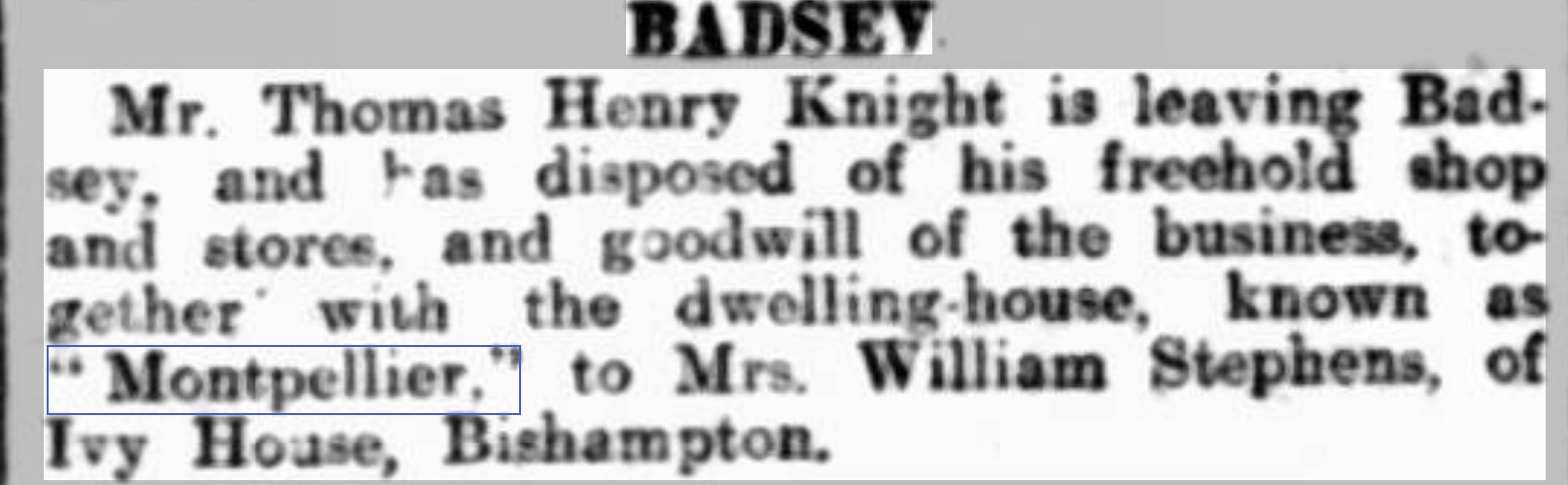
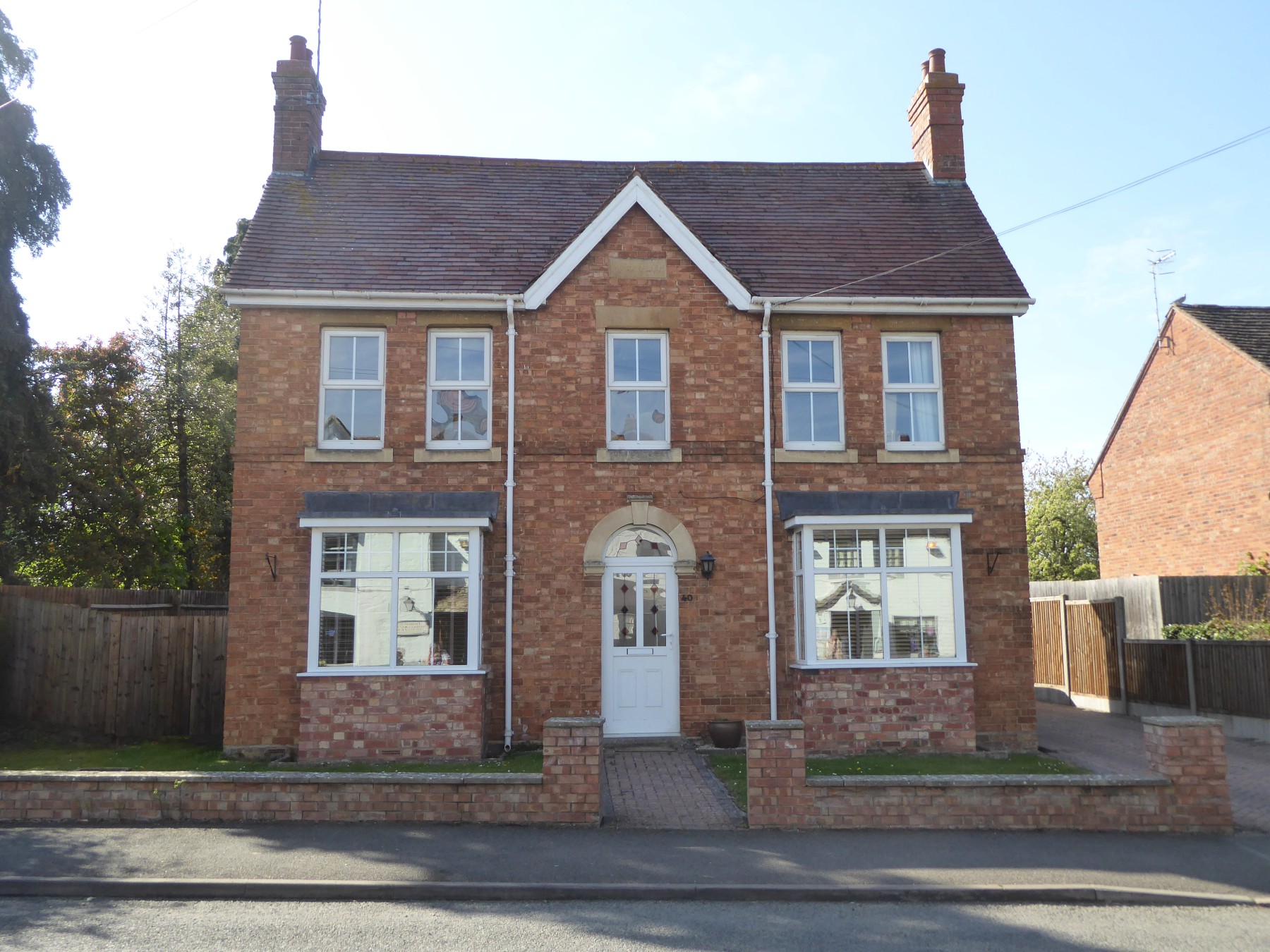
Thomas Knight (a market gardener who lived just a short distance away at the present-day No 32 High Street) had bought 268 square yards of land from the trustees of the Lord estate on 25th March 1911 for £46 16s 0d. A few months later, Thomas took out a mortgage of £300 and used this to build a house on the land, where he went to live with his wife, Nellie, and young daughter, Miriel Joan (born 1910). The house was called Montpelier (spelt with one “l”) and given a name plaque. Why it was given this name is not known, as that had also been the name of the present-day No 42 High Street, now known as Badsey Hall. Thomas opened a general store in the front room of the house and began advertising in the Parish Magazine.
© The Badsey Society
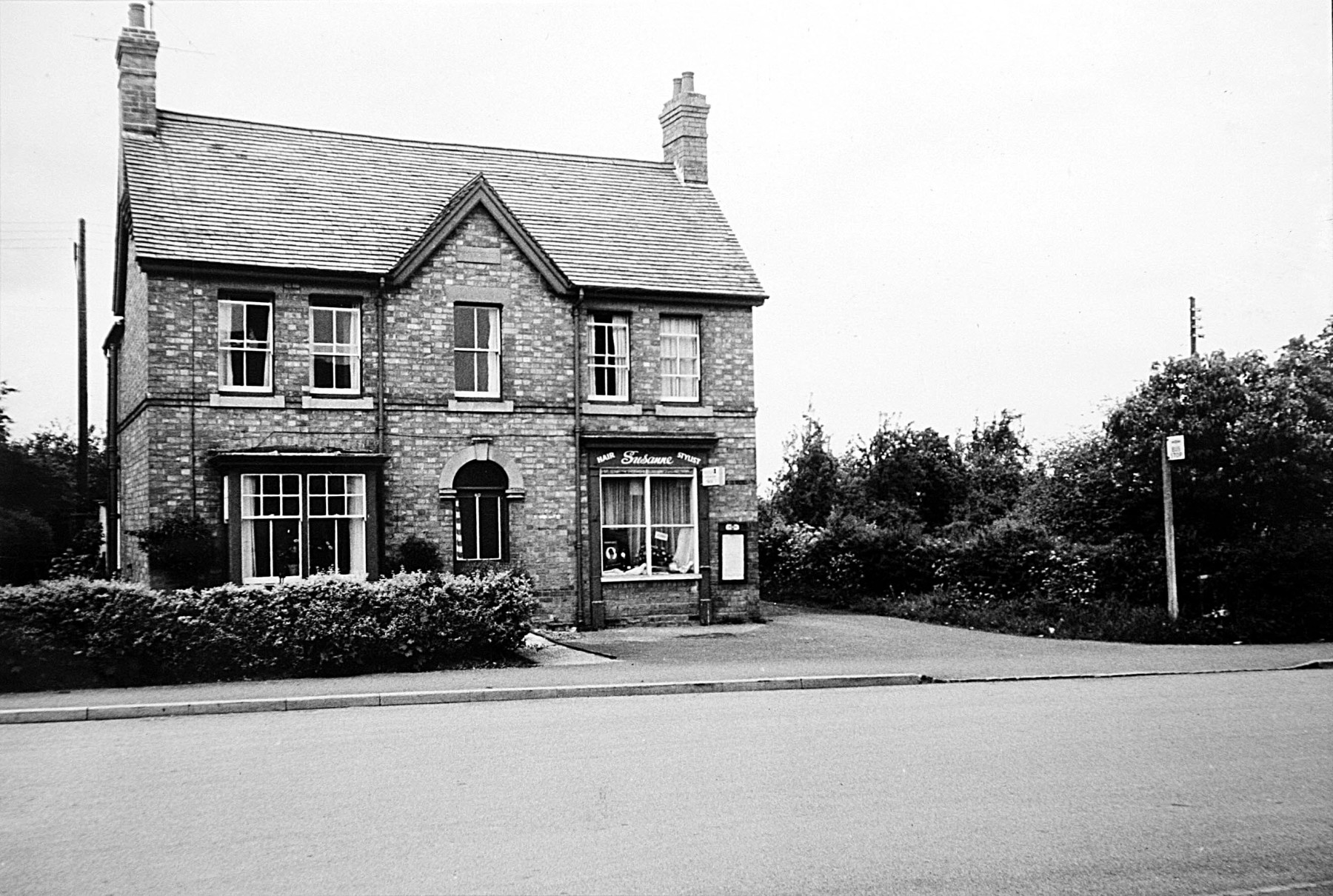
Mary Stephens bought the house in January 1913 for £480. Documents borrowed from the then owners of 40 High Street in 2010 reveal that the indenture was signed on 13th January 1913, and that £300 of the purchase money was paid to the mortgagee, Alice Penelope Lord, and £180 to T H Knight. The property was described as “All that before abstracted premises together with the messuage or dwellinghouse and shop with the outbuildings then erected thereon.” The house and shop was let to Ernest Frederick Salter (affectionately known as “Blind Fred”) who had previously had a shop at 1 Belmont Terrace. Fred and his wife, Sarah, moved in with their large family, remaining there for the rest of their days, Fred dying in 1941 and Sarah in 1948.
After Mary’s death in 1915, the house passed to her son, Harry Curnock Stephens, and then, on his death in 1922, to his widow, Josephine Louisa, who sold it in 1929 (possibly to the Salters).
Who were Mary Stephens and Harry Curnock Stephens?
Mary Stephens and Harry Curnock Stephens were John’s great-grandmother and grandfather respectively but they had both died long before he was born. As far as John was concerned, his relatives had connections with Bishampton in Worcestershire and Dumbleton in Gloucestershire – certainly not Badsey!
Mary was born at Bishampton in 1847, the youngest of seven children of John Curnock, a farmer, and his wife, Harriot (née Biddle). In 1869, Mary gave birth to a baby boy, George William. Her mother died a month or two later, followed by her father the following year so, at the time of the 1871 census, Mary and her young son were living with three of her older siblings in Bishampton, where eldest brother, John, was head of household.
On 25th September 1871 at Bishampton, Mary married William Stephens. William was innkeeper at The Dolphin Inn and a farmer of 66 acres. The couple had a son, Harry Curnock Stephens, born in 1885.
Mary was widowed in 1896. By the time of the 1901 census, Mary and her younger son, Harry, were living with her elder son, George, at his farm in Dumbleton. By 1911, Mary had returned to Bishampton where she was living at Ivy House. She remained at Ivy House until her death on 22nd February 1915, aged 66. She was buried in St James’ Churchyard beside her husband.
Harry Curnock Stephens was born at Bishampton in 1885 but moved with his mother to Dumbleton after the death of his father in 1896. Harry worked as an assistant on his brother’s farm. He married at Dumbleton on 13th July 1908; his bride was Josephine Louisa Staight. Between 1908 and 1922 they had seven daughters and one son. Harry was just 37 when he died on 20th March 1922. His youngest daughter, Dorothy, was born posthumously in May 1922.
One wonders what Mary Stephens would have thought if she knew that, a century on, her great-grandson, who had lived in many places all over the world, would end up living in the very village where she had owned property.
Maureen Spinks, June 2026
Acknowledgements
- With thanks to John Waters for the loan of deeds.